

What We Carry
Memory & Migration
On View:
May 30 - July 5, 2026
Open Hours:
Wednesdays - Sundays, 11am to 5pm
Location:
The Nathaniel Rogers House, 2539 Mtk Hwy, Bridgehampton
co-curated by Jeremy Dennis, Mark Wilson and Darius Yektai
What We Carry: Memory & Migration, a new exhibition examining the intersections of movement, identity, and personal history, opens at the Bridgehampton Museum with a public reception on Saturday, May 30 from 5 to 7 PM at the Nathaniel Rogers House.
Co-curated by Jeremy Dennis, Mark Wilson, and Darius Yektai, the exhibition brings together a range of artistic perspectives that consider migration not only as a physical journey, but as an emotional and cultural experience shaped by memory, displacement, and belonging. Through a variety of media, the works on view reflect both individual narratives and broader histories, offering a layered exploration of what it means to move—across geographies, generations, and identities.
Rooted in themes central to the East End and beyond, What We Carry underscores how migration stories are embedded in local history while resonating on a global scale. The exhibition invites visitors to reflect on the objects, traditions, and memories carried across time and place, and how these elements shape a sense of home.
In conjunction with the exhibition, the Museum will present two public programs that further explore its themes. Author Lenny Ackerman will discuss his book Leibish’s Journey, a powerful account of survival, displacement, and perseverance. Additionally, historian Dr. Tara Rider, PhD, will present Journey of Hope: The Irish in New York, examining the experiences and contributions of Irish immigrants and the enduring impact of their migration stories.
Funding for this exhibition was generously provided by the Robert David Lion Gardiner Foundation. The opening reception is free and open to the public. Admission to the Museum is always free during regular hours, with a suggested donation to support its programs.
This exhibition has been generously funded by the Robert David Lion Gardiner Foundation.

The Bow Family
The Bow Family, with roots in Southern China, has been a part of the Bridgehampton community since 1975. Their journey to the United States exemplifies a time when an immigrant to the U.S. could achieve the American Dream, bolstered by a solid family support system, a strong work ethic, determination, creative adaptability, and a bit of luck. To quote George Bow, “The harder I work, the luckier I get.”
The current generation of Bow Family members are grateful for the sacrifices, courage, and the memories of those who came before us. The story of our family’s initial migration and assimilation to America has shaped our world view and continues to inspire us in our daily lives.


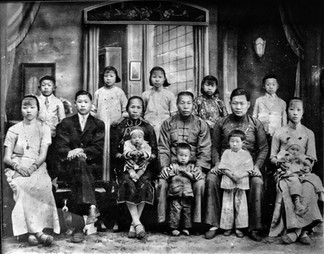


Early History: Our Grandparents’ Journey to America
Ng Ten Bow (伍良勳), our grandfather, was a courageous young man with his head in the clouds and his heart bursting with hope when he boarded a steamship from Guangdong Province in China to San Francisco in 1908. Like many immigrants, he earned his economic freedom in America through backbreaking manual labor and dogged perseverance. At a time when many laws and hiring practices confined Chinese immigrants to only a handful of occupations, Ten Bow opened a Chinese hand laundry business.
By 1918, he traveled to Montreal to bring his bride, Wong Tew Lon (江屏心), back to America. Born to impoverished silk farmers in Shunde, China, our grandmother, Tew Lon, was adopted at an early age by a Canadian Chinese family. A Chinese woman with Canadian citizenship was a rare find as Canadian nationality facilitated passage to the United States. In the U.S., the Page Act of 1875 prohibited the immigration of Asian forced labor and prostitutes to the U.S. At the time, politicians blamed Chinese immigrants for domestic unemployment and a faltering economy. Consequently, when the Page Act of 1875 was applied with extreme prejudice, it broadly labeled all potential Chinese women emigres as prostitutes, effectively blocking most Chinese women from entering the U.S. In the early 1900’s, the ratio of Chinese men to women was approximately 20:1. With few Chinese women living in America, Ten Bow was fortunate to find a mate, facilitated by a family match-maker. After their marriage, Ten Bow and Tew Lon settled in Jersey City, New Jersey and started their family, sustained by their laundry business.

In 1928, our father, George Ng Bow, née Ng Fook Sone (伍福順), was born in New Jersey. He was the sixth of ten children and the third son of Ten Bow and Tew Lon. Shortly after his birth, as the U.S. began its descent into the Great Depression and businesses failed, the family patriarch, Ten Bow made the difficult but strategic decision to leave America and return to Taishan, China.
A Return to Guangdong China: 1928-1938
Ten Bow and Tew Lon ran a bustling dry goods and produce store in Taishan. They lived with open hearts in their community, frequently offering loans and forgiving debts to fellow villagers in need. Their son, George, spent an idyllic early childhood in China, teasing the water oxen and fishing in a nearby brook from age one to ten. He would fondly remember his bucolic existence overlooking rice fields under the golden light of dusk. For the next nine years, George lived in his family’s home village as the third son of kind and hard working parents, and brother to nine siblings.
The Diaolou

Home was a seven-story house and watchtower also known as a diaolou. Standing as the tallest structure in the village, the house was a testament to the family’s travels and good fortune in the U.S. Various diaolou in the region, constructed by Chinese immigrants from America in the early 20th century, combined Western and Chinese architectural styles. They are reminders of this enterprising generation of Chinese emigres and their embrace of the wider world. Ten Bow left no doubt about his dual identity and his fondness for America. He carved his name onto the watchtower’s facade in both Chinese characters and in English demonstrating his affinity to both nationalities. Ten Bow’s ancestral home still stands nearly 100 years later and was recently memorialized as a protected cultural site in China. Many others also remain, including the Kaiping Diaolou, designated a UNESCO World Heritage site in more recent times.

Escaping War and Starting a New Chapter in the U.S.: 1938-1950
However, the 1920s and 1930s in China were turbulent. In 1927, Chinese civil war broke out between the Nationalist Government and Chinese Communist Party, and in 1937, Japan invaded China, marking the start of World War II in the Pacific theater.
By 1938, when news of the Nanjing Massacre reached southern China, Ten Bow summoned his courage, once again, and gathered his four eldest sons, boarded the SS Princess Charlotte (a Canadian Pacific Steamship), and left southern China for the last time, escaping just weeks before his village fell to the Japanese Army. This would be the third pivotal transcontinental journey he would orchestrate, changing the course of our lives, averting calamitous times for a more prosperous environment. Ten Bow and his sons arrived in Seattle and ultimately settled in Jackson Heights, New York. There, the family re-established their laundry business. Far from young George’s pastoral past, the days were long and arduous. This hard life imprinted deeply on George and forged a strong work ethic that was tempered by the comfort of family.




Service in the U.S. Army: Early 1950s
Volatile times continued. Now 23, George, along with his brothers, served in the United States Military. From 1951 to 1953, George served as a staff sergeant in the 28th Infantry of the U.S. Army during the Korean War. He participated in the NATO command in defense of Western Europe during the Cold War. During his service George stood shoulder to shoulder with other Americans. Strong bonds with members of his infantry reinforced the notion of equality among all people, regardless of race, ethnicity, or socioeconomic standing. These lessons of acceptance would later inform his circle of trusted friends, his receptiveness to new people and experiences, and his sense of fairness. After returning from his service, George met his life partner, Vivian, in 1954.
Vivian’s Early Childhood and Transition to America: 1933 to 1955
Our mother, Vivian Luke was born Luke Pui Jing (陸佩貞) in 1933 in a neighboring village in Taishan, China. She and her loving mother, Chan Ly Jean (陳麗珍), lived in their home village for Vivian’s first eight years. Vivian’s father and our grandfather, David P. Luke (陸廣年), spent most of Vivian’s childhood in America. Typical for that time, he worked abroad and sent money back to China. However, with the Japanese occupation of Guangdong in 1938 and as the war intensified, David could neither return to China nor send remittances home. Ly Jean, David’s wife and now Ly Jean Luke, was forced to move to Guangzhou City to find work in order to support her family. As a result, Vivian continued to live in the countryside and became her elderly grandmother’s caregiver at age ten. Living in poverty and under increasingly hostile Japanese occupation, Vivian would eventually witness her maternal grandmother’s death by starvation. She would bear the news of the death of her paternal grandmother, shot by Japanese forces as she gathered firewood, and her two uncle’s imprisonment and untimely deaths. Shortly afterwards, Vivian moved closer to the city to be with her mother, but they continued to live under the unrelenting threat of assault, violence, pillage, and capture.
Later, after Japan’s surrender in 1945, China’s civil war resumed. However, Vivian’s father, David, was able to return to China. As a Chinese-American, he could obtain official immigration papers to bring family members from China to the U.S.. He was able to secure immigration papers for his wife, Ly Jean. However, Vivian did not receive her official immigration papers. Devastated, she would learn later that her father had sold her birth document to a male relative, making her migration to America impossible. Incredibly, this was not uncommon at the time. With the 1875 Page Act and 1882 Chinese Exclusion Act still in effect, and Chinese cultural norms that expected sons to be the family breadwinner and to carry on the family name, abandonment was the cruel fate for many wives and daughters during wartime China. As David’s spouse, Ly Jean was able to join her husband in the U.S. Seeking a more stable environment for their daughter, David and Ly Jean relocated Vivian, at age 14, to Hong Kong alone. At the time, under British rule, Hong Kong provided a safer haven from the turbulence of China still in the throes of civil war. Once arrived, Vivian stayed with distant relatives and enrolled at school.



Desperate to reunite with their daughter, her parents made several attempts to bring Vivian to the U.S. She would finally arrive in America four years later in 1951. Now, 18 years old, she joined her parents on Pell Street in New York City’s Chinatown. Subsequently, and at last in happier times, Vivian and George met through a family matchmaker and married in 1955 at True Light Lutheran Church in New York City.

From the Dragon Seed to Bridgehampton: 1940s to present
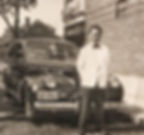
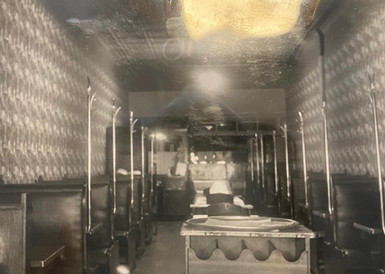
On the paternal side, the Bow Family transitioned from the laundry business and in the 1940s embarked on a restaurant venture in the U.S. They called it Dragon Seed, taking its name from Pearl S. Buck’s namesake novel about Chinese struggle and perseverance. At its height, there were three Dragon Seed restaurants run by the family. The restaurants were a neighborhood anchor and were favored by everyday folks, power brokers, and musicians alike, including Louis Armstrong.
George would take ownership of his own Dragon Seed restaurant in Jackson Heights. This mixed neighborhood was and still is a melting pot of languages, ideas and world views. Practicing values he learned from his own father, George’s days were long. Most nights he didn’t return until 1 am, after the kitchen was scrubbed and the day’s accounting was done. On rare nights, he would return early, his clothes still smoky with the scent of roast pork, and relax with Johnny Carson or a Yankees game on TV. Always innovating and staying one step ahead of the shifting demographics, George introduced a white tablecloth environment, turning the restaurant into an elevated fine dining experience.
As popular trends changed and to bring distinction to his own restaurant, George transformed the Dragon Seed into a Polynesian Tiki dining experience, a nod to New York City's Trader’s Vic in the esteemed Plaza Hotel. He was host and a trusted friend where he tended bar, creating an engaging environment for his diverse community.



Meanwhile, Vivian carried deep anguish in her heart, oftentimes insurmountable, she prevailed despite her traumas. She assimilated and embraced the opportunities in America while never forgetting the profound sadness of her past. She was the family caregiver for over 35 years, rearing five children and tending to her parents. Later in life, she pursued other ambitions, obtaining her real estate license and achieving her high school diploma as a 50 year old woman. She also created meaningful wealth for her family through investments in the real estate and equity markets. After a heart breaking adolescence, Vivian made a good life with George and together they raised five children of their own.
In the early 1970s, George learned about Bridgehampton from one of his devoted friends and made his first trip to the East End.
George gazed across endless potato farmland and breathed deeply the scent of freshly turned dirt. On Mecox Beach he marveled at the ocean's call and the saturated colors in the sunrises and sunsets. Hearkening back to his childhood memories, the air, the light and its planting fields, he recognized this place. By 1975, he set down roots in Bridgehampton. Despite a myriad of challenges in the U.S., George forged a path from immigrant to east end resident in his own lifetime. It was a stunning achievement given the heavy barriers of assimilation, the pervasive scourge of racism and the resounding echoes of the Exclusion Acts. He was a pioneering beacon for inclusivity and within a generation he built a durable haven. It was 1975 and, in a sense, George’s return to home after traveling 8,000 miles from Taishan just 37 years prior.
The family home in Bridgehampton has expanded with each new generation. As George intended, it continues to be a place of peace, laughter, and respite for the Bow Clan, where family and friends can gather to share, reflect, and celebrate life together.

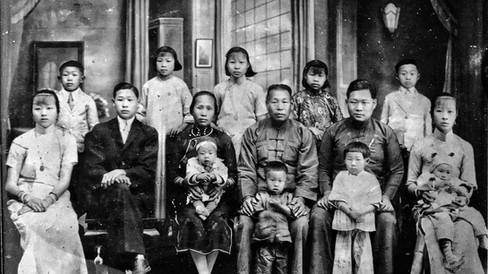

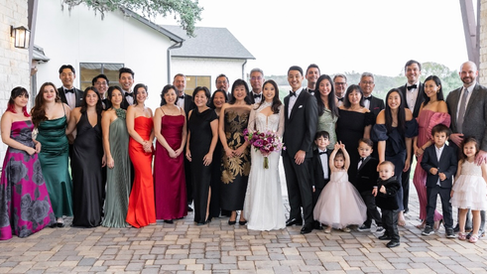
From the Bow Family,
We are deeply grateful to every family member who contributed photographs, documents and
memories that brought our shared history to life.
Special recognition must be noted for our Aunt Ann, Ten Bow and Tew Lon’s surviving
daughter. At 99 years old she grew up in the 1929NGTENBOW diaolou. Her stories made us
laugh, cry and filled us with tremendous pride.
Thank you for helping us to honor our fathers journey from Taishan to Bridgehampton.
Leibisch's Journey


Lenny Ackerman was born and raised in Rochester, New York, and divides his time between Palm Beach, Florida, East Hampton, New York, and Danforth, Maine. In 2025 Lenny authored Leibisch’s Journey, a gripping true story about his fathers journey to America. At age 12, is forced to flee his home in Ukraine during the upheavals of the Russian Revolution. Intending to follow in the footsteps of his older brother, Sydney, who had emigrated to the U.S. four years earlier, Leibisch sets out alone, carrying little more than a knapsack with some food, a packet of Sydney’s letters and the precious ritual objects given to him by his father for a Bar Mitzvah the following year.
Traveling west via a battle-scarred, patchwork railway system, Leibisch makes his way through the villages and towns of Ukraine, Poland, and Germany to the port of Hamburg, where he will board a steamship to America. But an unexpected, tragic event during the final spasms of World War I will change everything. Diverted by 5,000 miles and delayed by five years, Leibisch’s long journey to America will shape the complicated, driven man Leibisch eventually becomes: one who achieves the American Dream yet is forever haunted by the past and the fate of the family he left behind.
Join us on June 20th at 5pm for a talk with Lenny Ackerman on his father's life and journey.
Jeremy Dennis
Jeremy Dennis is a board member at the Bridgehampton Museum, the Lead Artist and President of Ma’s House & BIPOC Art Studio, a fine art photographer, and a tribal member of the Shinnecock Indian Nation in Southampton, NY. In his work, he explores themes of indigenous identity, culture, and assimilation. For this exhibition, Dennis has worked to collect pieces from Indigenous artists such as Heather Rogers, Durrell Hunter and others, that can speak to the themes of migration, which in human history has mostly been seen as a choice, but that has not always been the case for Native Americans.

In Bike Ride 1, Dennis uses subtle satire to explore migration, return, and Indigenous presence on ancestral land. A Native figure rides a bicycle down a dirt path toward a distant house, creating a quiet scene that carries a deeper critique. The rider is not shown as a threat, but as someone moving through land shaped by memory, displacement, and ongoing relationships to place. The bicycle becomes a symbol of everyday movement, while also pointing to longer histories of Indigenous mobility, removal, survival, and return.
The work connects to Land Back by challenging settler fears that Indigenous reclamation is violent or vengeful. Land Back is an Indigenous-led movement advocating for the return of land, sovereignty, and stewardship over ancestral territories to Indigenous hands. It is a decolonial movement aiming to reclaim Indigenous jurisdiction over land, water, and resources, challenging colonial systems that caused land theft.
In this image, Dennis presents return as calm, deliberate, and rooted in sovereignty, stewardship, and repair. The lone rider exposes the absurdity of viewing peaceful Indigenous presence as confrontation. Through humor and restraint, Bike Ride 1 asks who is seen as belonging, who is allowed to move freely, and how Land Back can be understood as a movement of memory, responsibility, and continued Indigenous presence.
Below are some of the other works Jeremy collected from other Indigenous artists for this show.

Durrell Hunter’s Right Whale reflects the ancestral ties between the Shinnecock people, the waters that sustain them, and the history of whaling—a tradition central to Shinnecock life for generations. Inspired by the Shinnecock tribal seal, the painting offers a striking visual mirroring: a Shinnecock woman rises from the water as a hunter rows forward, their forms echoing across time.
Shinnecock whalers were integral to Long Island’s shore-whaling industry. By the mid-1600s, English settlers actively recruited them for their expertise. Skilled navigators, they ventured beyond the surf in small boats, harpooned right whales, and towed them ashore—a practice carried on for generations. Yet despite their essential role, many Shinnecock were bound by unfair contracts that created cycles of debt and servitude, even as their labor fueled the colonial economy.
Through this work, Hunter affirms Shinnecock’s enduring connection to the ocean and to the Atlantic right whale.

Denise Silva-Dennis’s "Nana’s Place" was painted in 2007 as a birthday gift for Elsie “Nana” Kellis Smith, her grandmother-in-law, who was bedridden and unable to return to her own home. Knowing that Nana longed to be back in her house, Silva-Dennis painted the view from Nana’s front door: the lawn, trees, hedges, and Heady Creek in Southampton. The work becomes a gesture of care, bringing home to someone who could no longer physically return there.
The painting also connects Nana’s personal story to broader Shinnecock histories of land, water, labor, and migration. Nana, a direct descendant of Shinnecock people from the North Sea and Conscience Point area, once traveled by rowboat across Heady Creek to cook for H. H. Rogers in his mansion. Through this memory, Nana’s Place reflects how Shinnecock people welcomed, fed, and cared for newcomers on ancestral land, even as that land was taken and transformed. The creek becomes both a boundary and a passage, linking home, labor, survival, and continued Shinnecock presence.

Adrienne Terry, born in 1977 in San Bernardino, California, is a proud member of the Shinnecock Nation. Her artistic practice is grounded in family, community, and the enduring presence of Shinnecock people across homelands, waterways, and histories of movement. The daughter of respected Shinnecock jeweler Edward Terry, Adrienne grew up with a close relationship to making, material knowledge, and cultural responsibility. Her summers spent on Shinnecock lands strengthened her connection to tribal history, kinship, and place.
Terry’s work reflects the layered histories of migration, labor, and survival that shape Indigenous life on Long Island and beyond. For Shinnecock people, movement has never meant disconnection. Tribal members have traveled for work, family, education, and survival while maintaining ties to ancestral lands and community. This history includes Shinnecock whalers, whose labor carried them across oceans and into global maritime routes, while their identity remained rooted in Shinnecock homeland and sovereignty.
Using leather as her canvas and wood-burning as her mark-making process, Terry etches symbols, patterns, and imagery that speak to memory, resilience, and cultural continuity. Her work honors Indigenous histories that have often been overlooked, including the role of Native people in whaling, maritime labor, and regional migration. Through these materials and symbols, she connects land and sea, home and movement, past and present.
Terry’s artwork serves as both cultural preservation and education. It invites viewers to consider Indigenous identity not as fixed in the past, but as living, adaptive, and deeply connected to place. Her practice embodies the strength of Shinnecock people and affirms the ongoing presence of Indigenous culture, family, and history across generations.
"This two-story house, located on Montauk Highway on the Shinnecock Reservation in Southampton, NY, still stands alongside Middle Gate Road, which was once known as Aunt Nancy's Path, dating back to the early 1900s. This path was the main route for people traveling deeper into the reservation to reach their homes. My great-grandparents, James and Nancy Smith, raised ten children in this house. My grandmother, Madeleine Smith Graham, was their third daughter and often shared fond memories of her happy childhood there. She recalled the vast, open spaces where she could see the water from her bedroom window.
James and Nancy owned a cow, chickens, a pig, and a horse/mule, along with wagons. Madeleine mentioned that everyone had a vegetable garden, and one of the largest belonged to Mr. T.H. Williams on Old Soldiers Road, which was so expansive it was referred to as "the farm." She enjoyed attending the little one-room schoolhouse located on the Shinnecock Reservation. This house holds significant historical value, serving as a place where ancestors recounted their experiences and extended acts of kindness, offering lodging to returning tribal members. The house represents our history, passed down through generations who continue to reside on the land. We feel fortunate to know the homestead and remember how Nancy Smith welcomed soldiers returning from war and those in need of shelter or food. She often shared candy with the children and was known to be a kind, sweet, and generous lady. Her husband, James, took great pride in maintaining their farm and crops, and he was known for having the first manicured lawn in the area.
Living close to the original house allows me to honor my ancestors' legacy. The New York State Education Department began erecting historic roadside markers in 1926 to commemorate significant events, people, and places from 1740 to 1918. The blue-yellow cast-iron color scheme for these signs was introduced in the 1920s and 1930s. One sign, titled "Shinnecock," was erected in 1935 and proudly stood at the edge of my grandmother's front yard. Visiting her and our extended family gave me a sense of pride and joy. I can still remember how cars would pull over to the shoulder to read about our history. Unfortunately, the original sign has been missing for decades. Now, only a pole remains, with a portion of the broken sign face.
The legacy of my ancestors serves as a foundation for modern identity, influencing cultural practices and establishing social norms. It transmits inherited stories and acts as a thread linking generations, creating a sense of community with cultural roots that foster belonging in a rapidly changing world.
This year, I plan to create a replica of the original sign and place it in its original location in front of the homestead, commemorating and celebrating our resilience and sovereign territory."
Madeleine Rogers, a Detroit-born artist and musician, approaches her seventieth year with a sense of pride and accomplishment. Her journey into visual arts was serendipitous, sparked by her mother's encouragement to explore her innate talent. Madeleine, the daughter of accomplished artist and vocalist Rosemary Rogers and the granddaughter of Madeline Smith Graham, inherited a profound appreciation for the arts. Her transitions from Detroit to places like Wellesley Hills, Massachusetts, and Pennsylvania before settling in the Shinnecock community enriched her perspective and infused her work with a unique blend of cultural insights and experiences.
Mark Wilson


Mark immigrated to New York City, which at the time, he, “considered to be an island off the coast of the USA,” in 1982. Having graduated from art school, Mark got in a plane to London, then Paris and then Berlin. He was driven by his curiosity for all that which was missing in small town rural Australia. Mark recalls, “When my feet hit the ground at the airport, I had a profound feeling that I was home.”
Serendipitous meetings with the likes of Andy Warhol and William Burroughs in those early days made it all the more welcoming. Mark felt at home!
It wasn’t for a couple of years when a young friend said to him that she thought he needed a break from the city and that her father had a place in East Hampton. Which at the time, Mark had never heard of. That weekend they flew in a helicopter out of Manhattan and 40 minutes later we were in East Hampton. The kindness of spirit and generosity of his weekend hosts made him feel like, “the prodigal son.”
Forty years have passed and Mark has being living here full time for twenty years. “I am migration!”

“The migration of humans, plants and animals across the globe has existed as long as life has inhabited the earth. Nature’s amazing capacity to navigate the earth by temperature, light, magnetic fields and the stars while plants use the wind and wildlife to transport their seed.
The monarch butterfly weighs only half a gram yet undertakes a journey of three thousand miles from southern Canada to Mexico. This trip takes four or five generations, descendent of one butterfly. The females spawn along the way, young butterflies take over where their parents left off. Unfortunately deforestation and the decline of milkweed that the monarchs feed upon has caused numbers to dwindle.
In the plant world the species represented by its shadow in my print of a water color landscape. The Russian Olive is prevalent in our neighborhood. It migrates aggressively by producing large quantities of fruit eaten and dispersed by birds and by spreading through root suckers, stems and seed dispersal by water. That makes for a growth that is difficult to eradicate.”




The Yektai Family
Manoucher Yektai

Yektai’s path to the United States was shaped as much by circumstance as by intention. In 1944, he left Iran with the aim of studying in Paris, which at the time still represented the center of artistic training and modernist culture. For a young artist coming of age in Tehran—where access to contemporary painting was limited and artistic opportunities constrained—France offered the promise of immersion in a living tradition. But the war intervened. With Europe still unstable, Yektai’s journey was interrupted, and he found himself in New York in 1945, an unplanned detour that would ultimately prove decisive.
What he encountered there was not a substitute for Paris, but something altogether new. In the immediate postwar years, the axis of modern art was shifting, and New York was emerging as a site of unprecedented artistic energy. For Yektai, America also represented a broader set of possibilities—an environment defined by openness, structure, and the belief that talent could determine one’s place. This stood in stark contrast to the limitations he had known in Iran, where artistic life operated within narrower cultural and institutional bounds. In New York, he entered a world information, one that allowed him not only to participate in modernism, but to help shape it, finding in the city both the freedom and the conditions necessary to pursue his work on his own terms.
When Yektai eventually settled on the East End, it was tied as much to personal life as to artistic community. His earlier visits in the 1950s had already introduced him to a growing circle of artists working out there—Willem DeKooning, Milton Resnick, Jackson Pollock, Ibram Lassaw, and James Brooks among them—at a moment when the Hamptons were still in formation as an artistic environment. It was not yet a destination, but a place artists were beginning to claim for themselves, drawn by space, light, and proximity to one another.
This shift to the East End also followed a broader movement among artists of Yektai’s generation. In the 1940s and early 1950s, many had spent summers in Woodstock, New York, where a different kind of artistic community had taken shape—more pastoral, but still connected to the rhythms of New York. By the mid-1950s, that center of gravity began to move east. Artists who had worked in Woodstock increasingly found themselves drawn to the Hamptons, where the combination of coastal light, open land, and relative proximity to the city created new possibilities for both work and community. Yektai’s own trajectory reflects this shift, aligning him with a generation that was redefining not only painting, but where and how it could be made.

His permanent move came in the early 1960s through his relationship with Helene Kulukundis, known by friends as Niki, who was already spending time in Bridgehampton, renting a summer place on the ocean at Pulvers Camp. In 1963, Yektai followed her out to Long Island, and the move quickly took on a more lasting shape. They married and soon after purchased a barn in Bridgehampton, which they converted into a home and studio.
The barn was not simply repurposed but carefully shaped around the needs of his practice. Yektai’s painting was physical—built up through thick impasto, often applied with palette knives, trowels, and improvised tools—and required space to move, to work on a scale that engaged the body as much as the eye. The openness of the structure allowed for this, creating a studio environment that was both functional and deeply personal, tied to the rhythms of daily life.
At the same time, the house became a center of social activity. Like many artists on the East End, Yektai and Niki hosted frequent gatherings that reflected the informal, interconnected nature of the community. These were not formal occasions, but extensions of the same conversations that took place in studios and in the city—artists, writers, and friends moving easily between houses, sharing meals, arguments, and ideas. The social life of the New York School did not disappear outside the city; it relocated and adapted, becoming more diffuse but no less intense.
Yektai remained deeply embedded in this network. Even in earlier years, his time on the East End had been marked by constant interaction—studio visits with DeKooning, Larry Rivers, and Motherwell; playing poker with Lassaw, Herman Cherry, Matsumi Kanemitsu, Michael Goldberg, and Norman Bluhm, then returning together to New York. These relationships continued to define his experience of the Hamptons, where artistic exchange was inseparable from daily life.
The landscape itself played an equally important role. The light of Long Island—clear, expansive, and constantly shifting—along with the proximity to the ocean, reinforced Yektai’s sensitivity to color, surface, and atmosphere. The openness of the environment mirrored the openness of his approach to painting, allowing him to sustain a practice that moved fluidly between abstraction and representation, between observation and invention.
In this setting—at once rural and communal, removed yet deeply connected—Yektai found a place that allowed him to continue developing his work on his own terms. The East End was not an escape from the art world, but a reconfiguration of it, and for Yektai, it became a lasting home for both his life and his work.
Darius Yektai

Darius Yektai was born in Southampton Hospital in 1973. His first imprint of the area. He grew up in New York City on the upper west side, and many weekends and every summer was spent in Bridgehampton. The freedom of being young and playing outside in nature left the second imprint. The beach, the woods, the ponds, the foliage and fauna, surfing, playing tennis and golf, fishing the ponds; all these elements coupled with the seasons and the weather systems created his sense of home. This was the landscape of his youth.

After graduating from the American University in Paris in 1996 with a degree in Art History, Darius moved to California where he married and began having a family. Two of his children were born in San Diego where he lived for 6 years. San Diego was the right place to begin his family, but there was always an underlying dissatisfaction with the lack of distinct seasons and dynamic weather. He missed the rumble of an oncoming thunderstorm, or the quiet of a deep winter snowfall. The changing colors that happens with the seasons that one can set their yearly clock to. The changing light. The sound of hundreds of geese landing on the pond where he was raised.
He says, “Like a salmon swimming upstream to the place of my birth, I was determined to get my family back to the Hamptons…the place where I was born and grew up.” So, in 2001 he moved his growing family back to Bridgehampton, and built his house and studio on a three-acre parcel of land that his father had purchased many years earlier, back when nobody wanted land in the woods of North Sagaponack. His youngest daughter Lilah Moon Yektai was born in 2003 in Southampton Hospital just like him.

“I wasn’t just returning to the landscape, I was returning to my family as well.” His mother and father were still living in the house he grew up in; an old renovated shingled house at the head waters of Sag Pond. His brother had already built a home and studio for his growing family on another parcel in the woods, and many of the friends he had grown up with were either moving back or would be in the near future. Summers were always a congregation of old friendships. Which still is the nature of the area. It seems we always come back. But for Darius there was one more reason to return: his father Manoucher Yektai was still alive and working, and was there to continue a conversation on art, on the sacrifices of being an artist, and about the generosity of the medium of paint.
This conversation had started many years earlier when Darius and his siblings became old enough to engage with him intellectually. Manoucher was not the type of father to take his children outside and throw a baseball, but once they became 7 or 8 and could understand concepts he took a distinct interest in looking at art and taking in nature with them; and those two things, nature and art were connected for him.
Family trips became museum destinations. Among the most memorable were to Paris, the Louvre, Musee D’Orsay and Madrid and the Prado. The visit to Amsterdam for Rembrandt and Van Gogh. Trips were to landscapes and areas and the nature that appears in paintings as well. So, the family went to Arles, and Aix-En-Provence to see where Van Gogh and Cezanne drew inspiration from and all over Italy and Greece. It was the details that would catch Manoucher’s eye that would engage his children and open them up to the idea of new thought joined to an ancient dialogue of artists.
That was the message in many of the conversations between Manoucher and his children; that originality and poetry could be connected to the history of painting, and that patience and dedication to that pursuit with confidence in self and hard work could succeed. Some of the deepest memories from these conversations that still resonate in Darius’s thoughts are the existential elements of an artist’s pursuit of a subject from when his father described to him how Cezanne walked over and over to view and paint the mountain (Mt Saint Victoire) and would sit and look and make a single mark, then sit and look and make another mark, and only late in his life would he be recognized for his efforts by a younger generation of artists. Also, how Rousseau worked as a doorman and painted for his life, only to make a series of jungle paintings heavily foliaged at the end of his life that would raise the importance of all his earlier work. That without that late series he might have just disappeared. The point was that the work is difficult and the story of it is unknown, that an artist must return to the painting and invest himself until they discover themselves.
Nico Yektai

A pair of benches that relate to each other as they find their ever-changing configuration.
I don’t remember the first time I came to Bridgehampton. It was always a part of my life.
When I was very young, we lived in a potato barn in Bridgehampton that my father had remodeled. He began the project working with Norman Jaffe, but ultimately went his own way, acting as both architect and builder. He was completely hands-on, and I was there for all of it. I learned the word hammer around the same time I learned mom or dad. I was more interested in the carpenter on the roof than I was in my parents.
That early experience stayed with me. Although we lived in New York City, the time we spent out east—especially those early years when the barn was still under construction—left a lasting impression. I always felt at home in the Hamptons. In the early 1970s, it was still a place where you could ride your bike through farmers’ fields and disappear for the day. We came out every weekend, year-round, which was unusual at the time, and I missed it whenever we returned to the city.
Some of my earliest memories are of that house and the gatherings my parents hosted there. Artists from the local community would come together, and while I didn’t fully understand it at the time, I was growing up inside an active and serious artistic environment. That proximity—just being around it—mattered.
When my siblings were born, my parents purchased a house on Sagaponack Pond. My father remodeled that as well, and eventually moved his studio there. By then I was old enough to really pay attention. I watched the additions go up, and before long I began building things of my own—not treehouses, but platforms in the woods. At first I used leftover materials from our own projects, and then, with my parents’ help, I was allowed to collect scrap wood from nearby job sites before it was discarded. What started as something informal became a kind of ongoing project, and a relationship with building that has stayed with me ever since.
I eventually left for boarding school, which in hindsight reflected something simple: I preferred the country to the city. After college, I returned to the Hamptons for a year to focus on making furniture, trying to understand how to turn that early interest in building into something more defined. That led me to graduate school at the Rochester Institute of Technology, in the School for American Crafts.
After finishing, I spent time in North Carolina working in an artist community, but I felt like an outsider there. When I came home for Thanksgiving, my father suggested I meet with Elaine Benson in Bridgehampton. I brought what was, in retrospect, a very rough portfolio—color copies of 35mm slides—and expected advice about what to do next. Instead, she told me she was putting me in her Emerging Artist show.
I told her I wasn’t ready. She told me it wasn’t my job to decide that—it was hers.
That moment changed everything. I moved back to the East End in 1995 and began preparing for the show. With no studio of my own, I worked out of the basement of my father’s studio. It was a practical solution, but it also meant daily proximity—shared meals, long conversations, and a continuation of something that had started much earlier, when I was a kid watching things being built.
The show itself was a turning point. It was well attended, and more importantly, it was taken seriously by the community. Many of the artists who came through were part of a generation that had already established themselves in New York and beyond. Their engagement with my work—and their willingness to take it seriously—was something I don’t think I would have found in many other places. It made staying here feel not only possible, but necessary.
A few years later, I met my wife, Elizabeth, who had her own longstanding connection to the East End. We married in 2002 and have raised our family here. The Hamptons are different now. My kids didn’t grow up riding their bikes freely the way I did. But they have their own relationship to this place, and an understanding of its history within our family.
What has remained constant is the sense that this is not somewhere we arrived temporarily—it is somewhere we became rooted. For me, that began with building, with being physically present in the making of things, and with growing up in a place where art was not separate from daily life. That foundation is still very much intact.
Lilah Yektai

The most natural part of my life is coming home to Sag Harbor. I was born in Southampton, grew up in my father’s house whose studio is attached to our living room, down the road from my grandfather’s studio and Uncle’s house and studio, surrounded by landscape family and paint. I constantly feel pulled back to Sag Harbor whether it’s in the winter, full of quiet reflection and light fireplaces, or in the heat of the summer, filled with beach and bustle.
I live across the ocean now in London, but intrinsically I come home like the monarch butterfly’s great migration to the place of my birth. My father and uncle passed me my grandfather’s studio; the biggest privilege is to look at the same pond my grandfather would look at while he would work. Nothing compares to resting your eyes on the trees of Sag Harbor, no city can make up for Long Pond’s ability to clear your brain of static. Working in this space also felt like a birth right of a sort; both my father and uncle before me had used this space as a painting studio or workshop, and now I get to share that legacy, pushing and pulling my work with the support of my family.
For the past four summers and parts of each winter I’ve been exploring my work practice in Sag Harbor. Support from the community of art lovers, collectors, friends and family, and confidants gave me the space to learn from those before me and push and pull my work in a way that is unique to the Hamptons. I was awarded an honorable mention at the Guild Hall Members Exhibition which propelled me with momentum into my senior thesis studying at and graduating from the Rhode Island School of Design. I was able to take what the curators and judges said to heart and mull it over to bring my degree to fruition. The community in the Hamptons is a tight knit network with people who watched me grow up who now support me and a family to lean on who planted their roots firmly in sag harbor so many years ago. I’m very grateful for Bridgehampton and the East End.
RSVP
Related Programming
Merchandise
Press
East Hampton Star - https://www.easthamptonstar.com/arts/2026528/artists-reflect-migration


